Berat Albania – Free Guidebook

Introduction
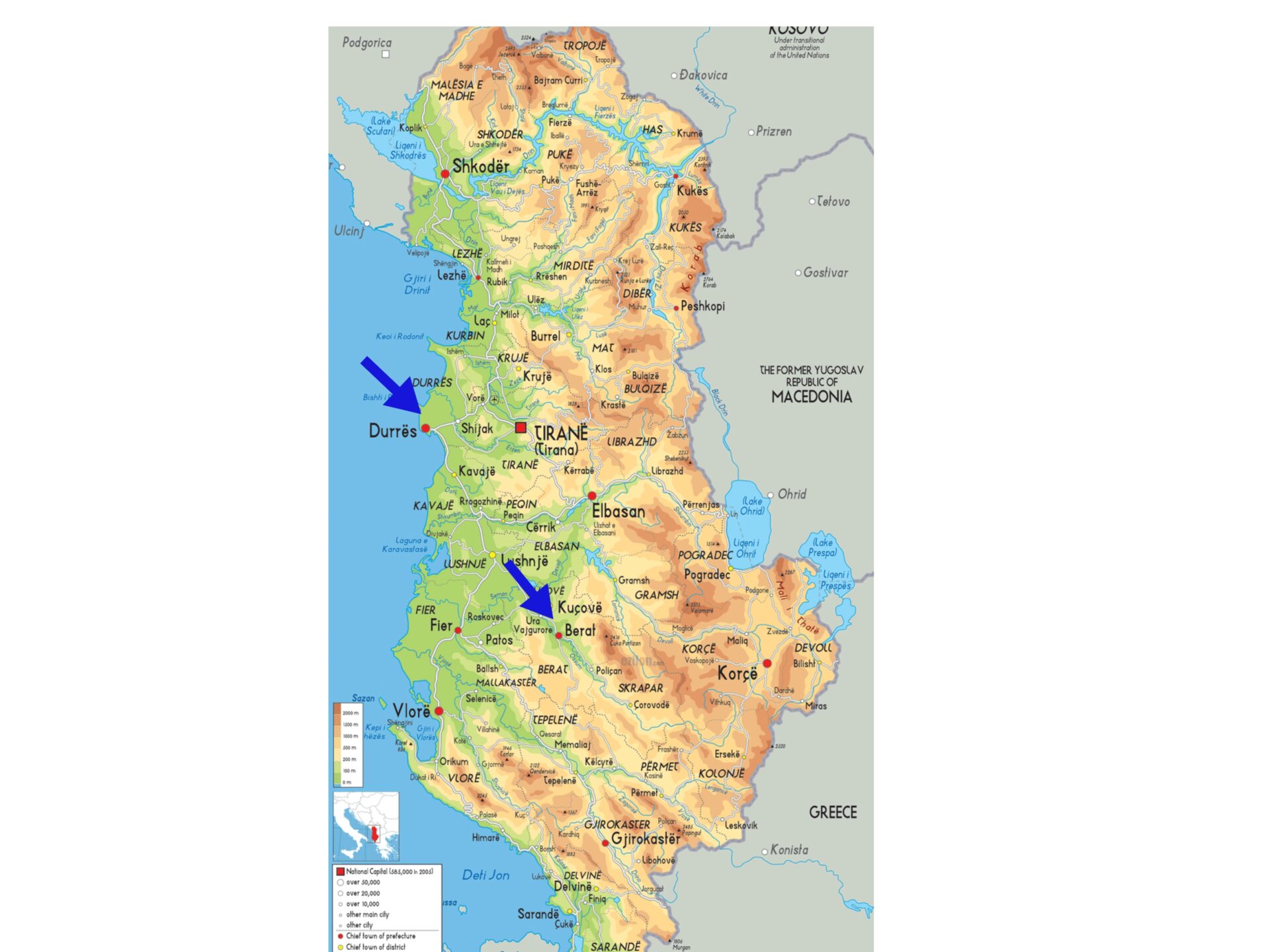
We took a day trip from Durres to visit the UNESCO World Heritage city of Berat Albania. In a guide driven taxi the trip was a scenic 90 minutes. This historic city has 2 parts – upper Berat and lower Berat (also older and newer). We visited both and we were awed at what we encountered in Berat Albania.
Where is Berat Albania
Berat is in the southern interior of Albania in the foothills of the Shpirag Mountains and divided by the Osum River.
Map of Albania
History
Berat was founded as far back as the 6th century BCE when it was an Illyrian settlement. From the 3rd century BCE it grew into a castle town. Just a little younger than Durres. It was once the site of the ancient Greek town Antipatreia (Byzantine Pulcheriopolis). The city was rebuilt in the 13th century. It renamed Beligrad (from which the name Berat derives) in the 15th century under Ottoman rule.
When to visit Berat Albania
It is cold December to February, highs 10-12C and rainy. Best time to visit is March to mid June and mid September to November when the temperature is pleasant 15-25C and rain is light. If you visit in the summer it can be hot 32C and up as well as muggy. Then it is best to visit the castle in early morning or evening. There is not much shade in the ruins.
How big is Berat
Population is about 63,000. This includes 100 families who live in the shadow of the castle.
How safe is Berat Albania
We found the area to be very safe, though we did not stay at night. But our experience in other parts of Albania we visited raised no concerns.
Book your day trip from Durres HERE
Traveler tip
when you book this tour from Durres ask for Marios for your guide.
Things to do and see in Berat Albania
Berat Castle
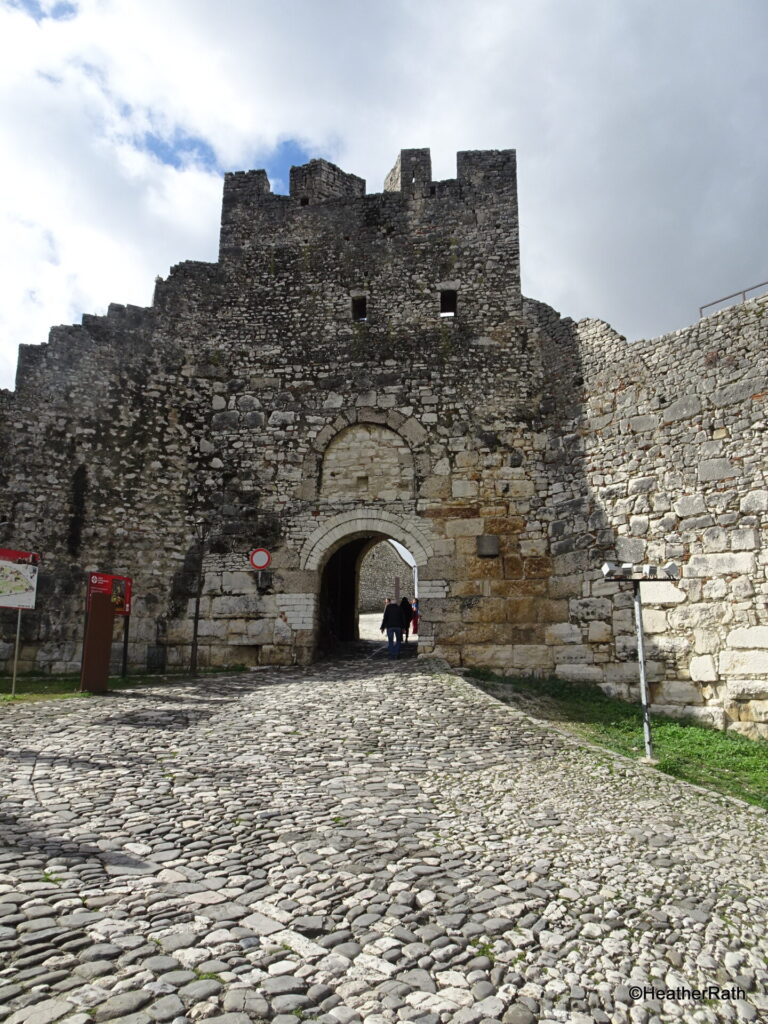
The original main gate to the Berat Castle, 187 m (613 ft) above the river below. It is quite a climb, best take a ride. The castle was built in the 4th century CE and remains almost unaltered from then despite occupations by the Byzantines and the Ottomans. It is open 24 hrs/day so go anytime. The castle is the largest in Albania.
Castle Walls
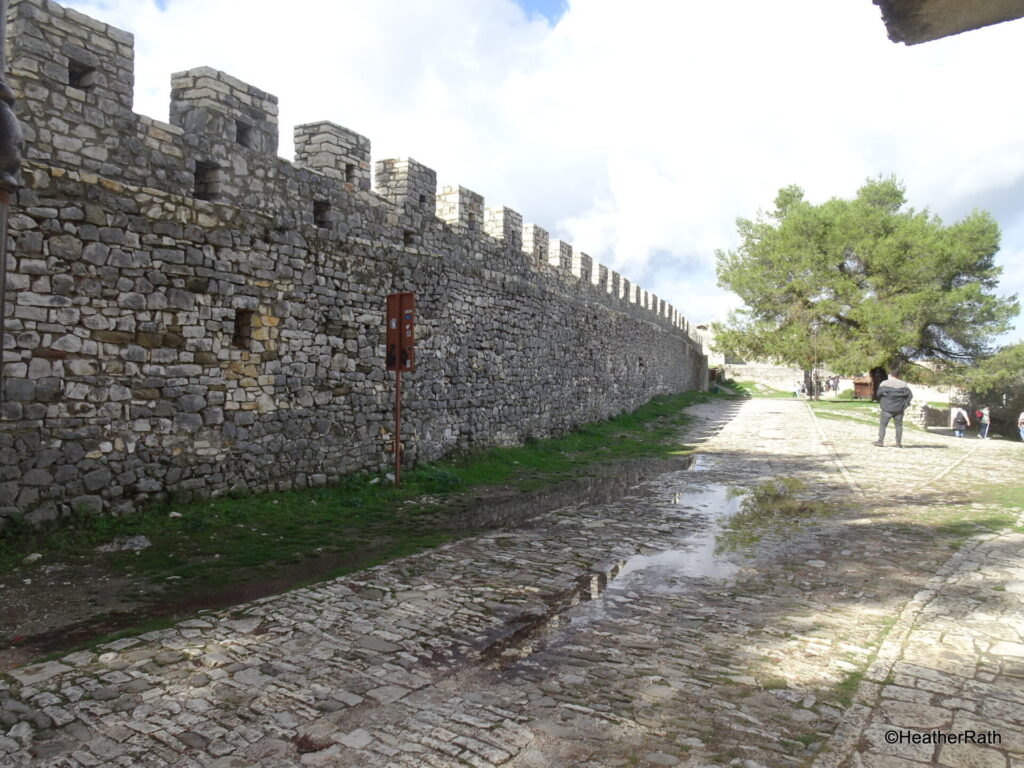
A section of the Castle walls. Within the walls is the Castle neighbourhood with about 200 residential buildings. 100 families live in this section. The remainder of the buildings are owned by Albanians to use as vacation homes. Some are guesthouses, restaurants and shops.
Red Mosque
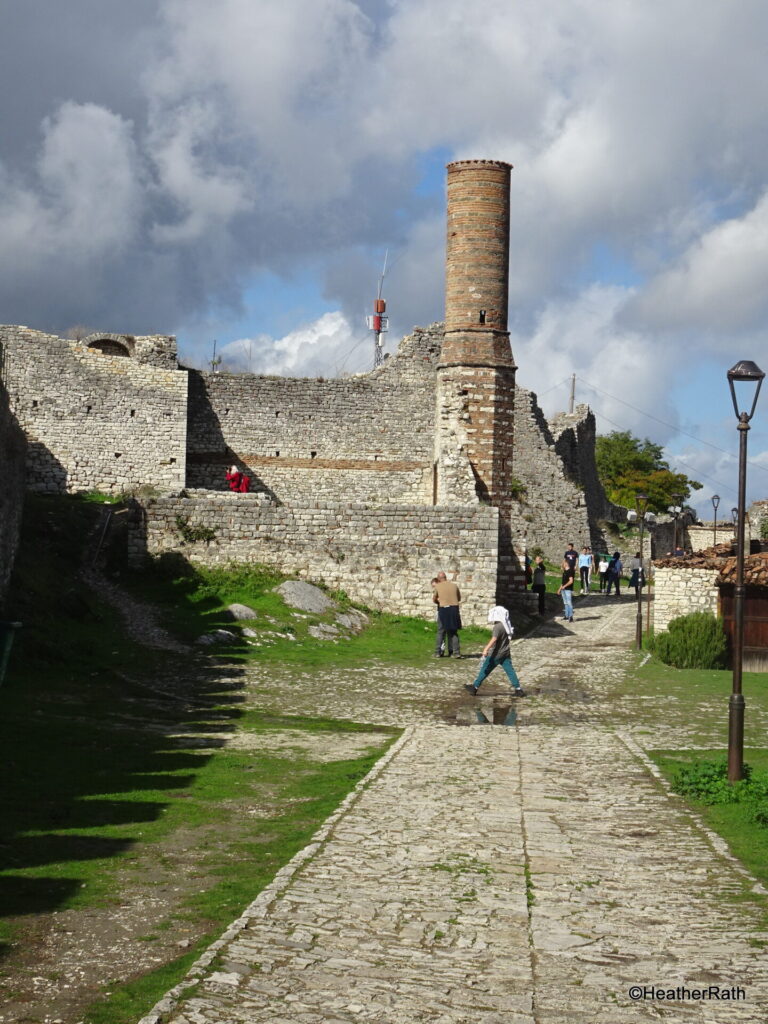
The remains of the Red Mosque. This mosque is one of the oldest in Albania, believed to have been built in the 15th century, shortly after the Ottomans conquered Berat in 1417.
Called the Red Mosque because of the red bricks used in its construction.
At the time it was used by the Ottoman military stationed in the castle.
White Mosque
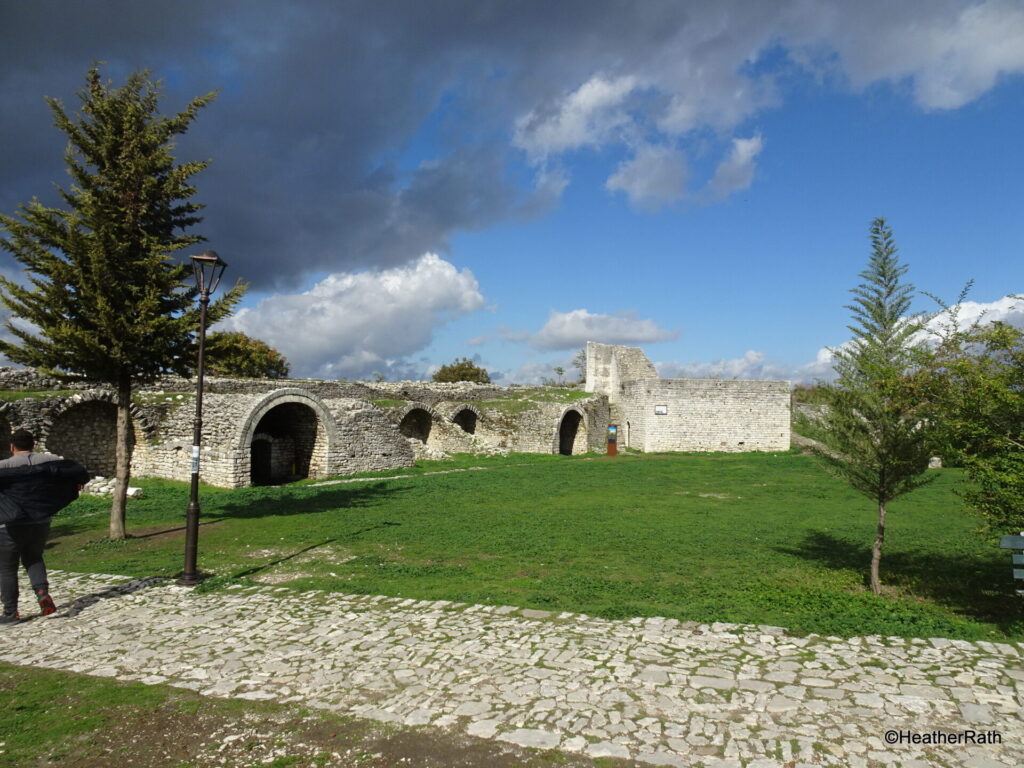
The building on the right is the White Mosque so called because it is made of rocks of white limestone. This mosque was built in 1417.
Only remnants of its minaret base and foundation walls remain.
Church of St. George
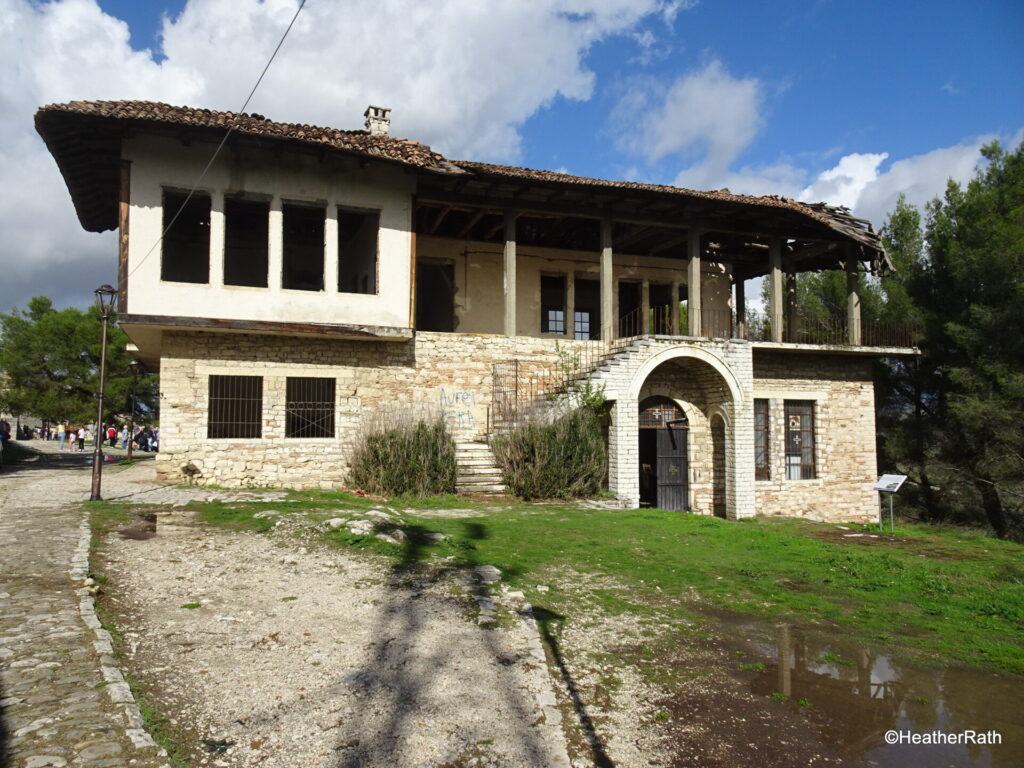
Built in the Byzantine era the Church of St. George is within the walls of the Berat Castle. During Albania’s communist regime, the church was closed and reportedly converted into a government residence as seen in the newer upper structure.
A small chapel underneath is now a functioning place of worship.
Holy Trinity Church in Berat Albania
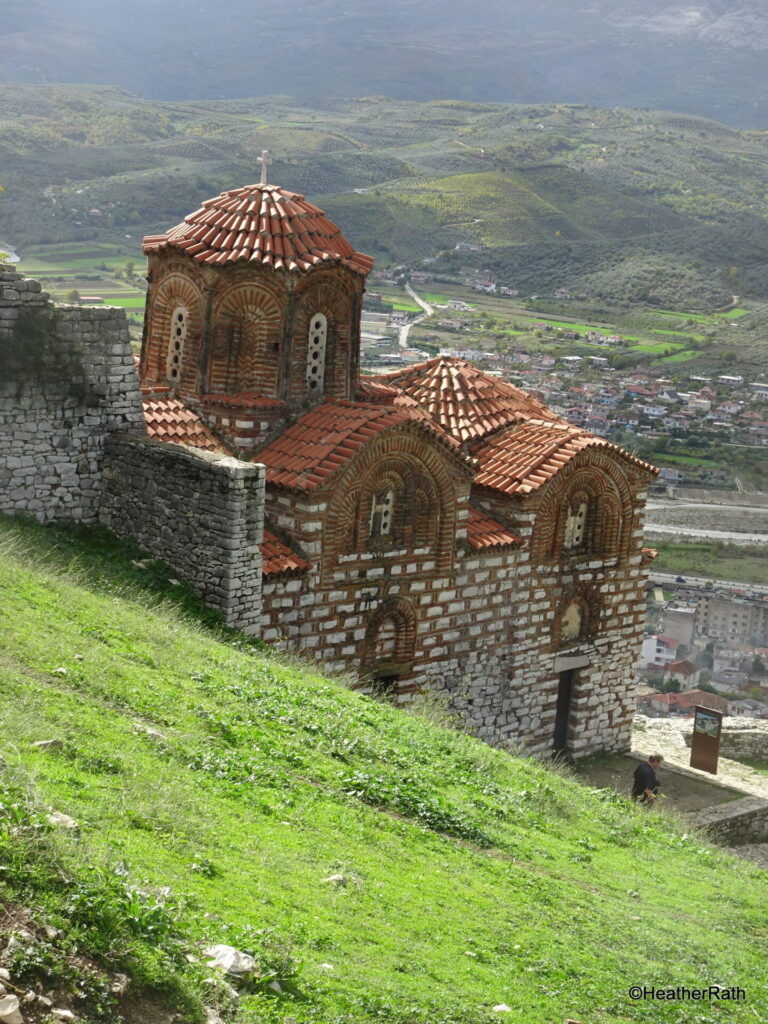
Built during 13th and 14th centuries (CE) this Byzantine church is the most photogenic church in the castle. It can be seen from below also. Apparently there are wonderful frescoes inside. However, the church is locked most of the time.
Head of Constantine
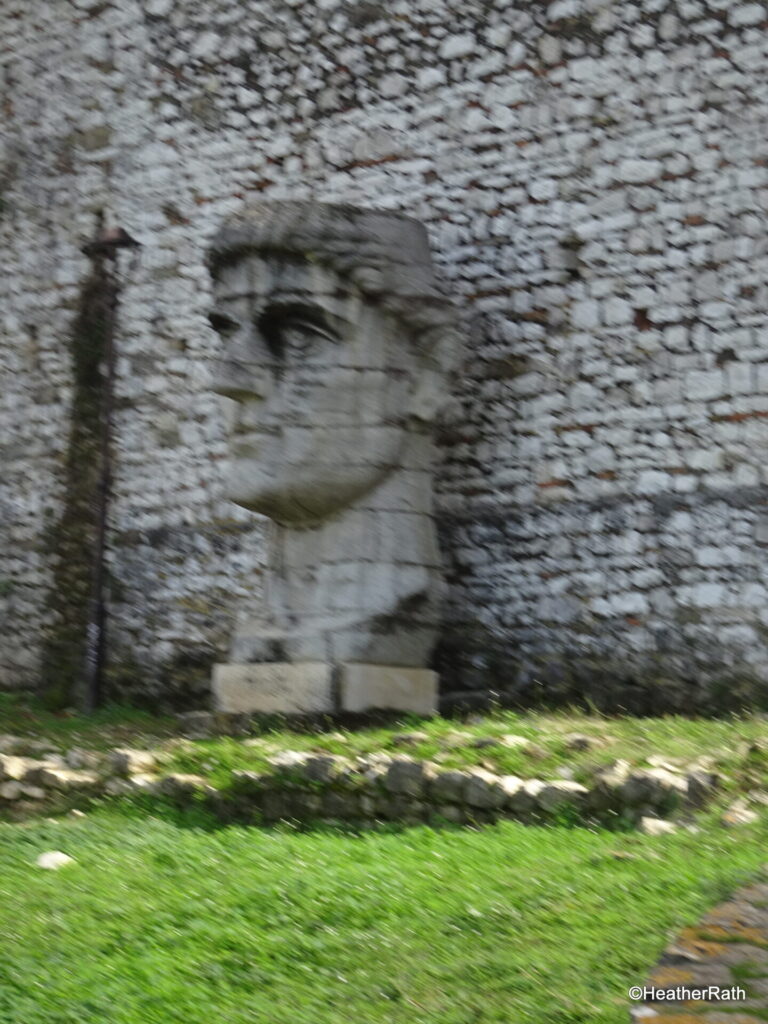
The 3.5 m limestone head of Constantine who was the Roman emperor from 308-337 CE. Constantine was the first Roman emperor to convert to Christianity, as well as the founder of Constantinople.
Church of Saint Nicholas
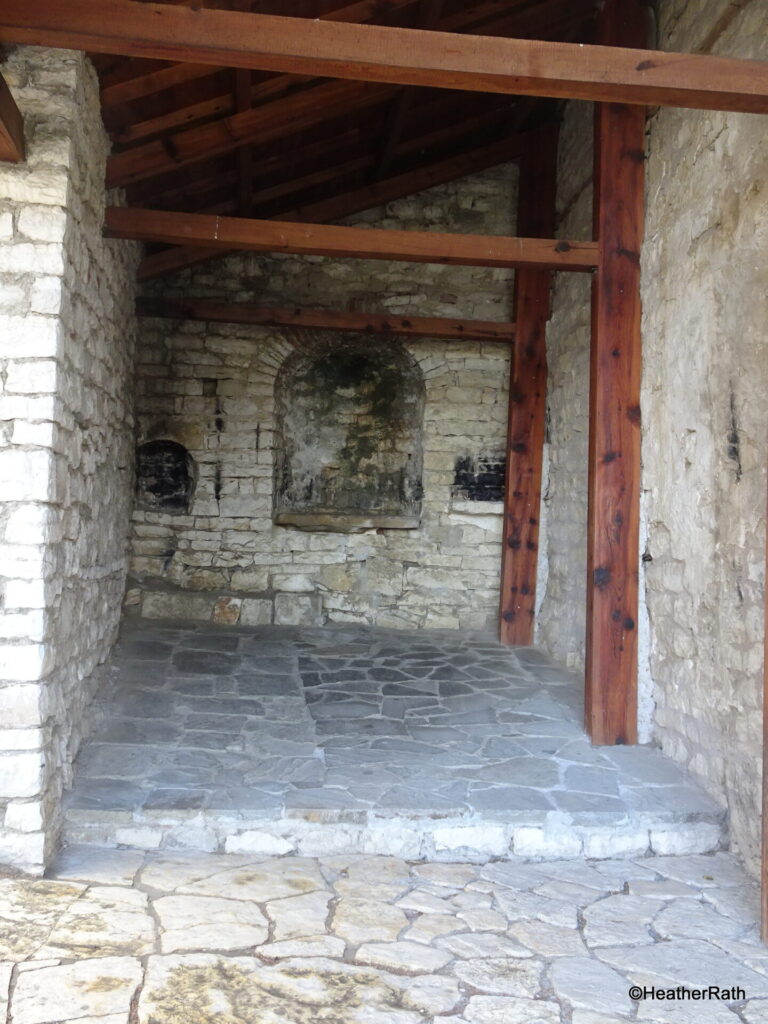
This Orthodox church was built in 1591. It is one of 20 churches built at one time or another within the castle walls. Only a few remain today.
There are valuable frescoes in the church which, as most of the other Castle churches, are kept locked. During the communist era in Albania most of the frescoes and church artifacts were hidden.
Meet a resident of the Castle neighbourhood
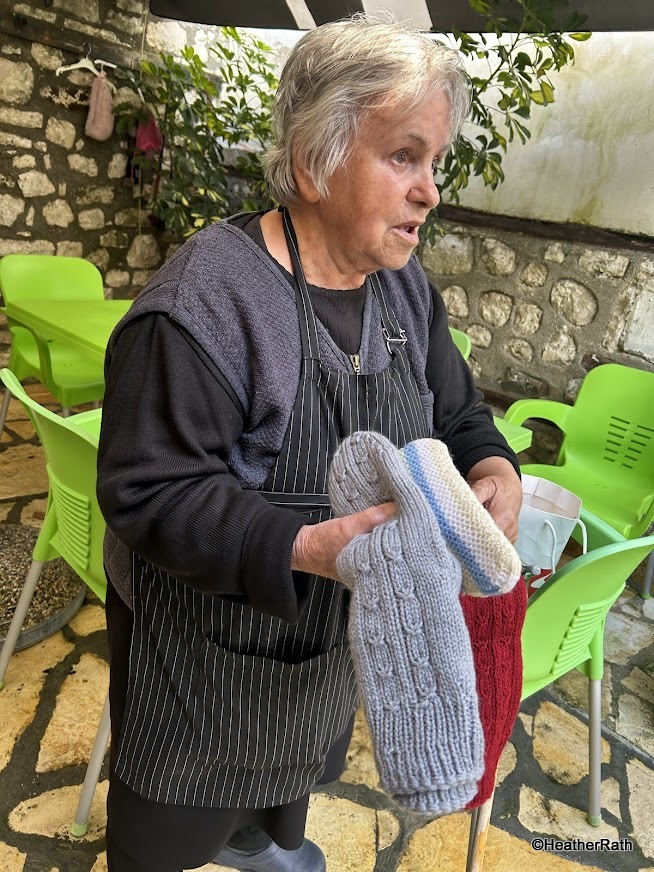
This is Lule (flower in Albanian) one of the residents within the castle walls. She sells her knitting to tourists. Any residents we met as we wandered we found to be welcoming and friendly.
On a horse with no name
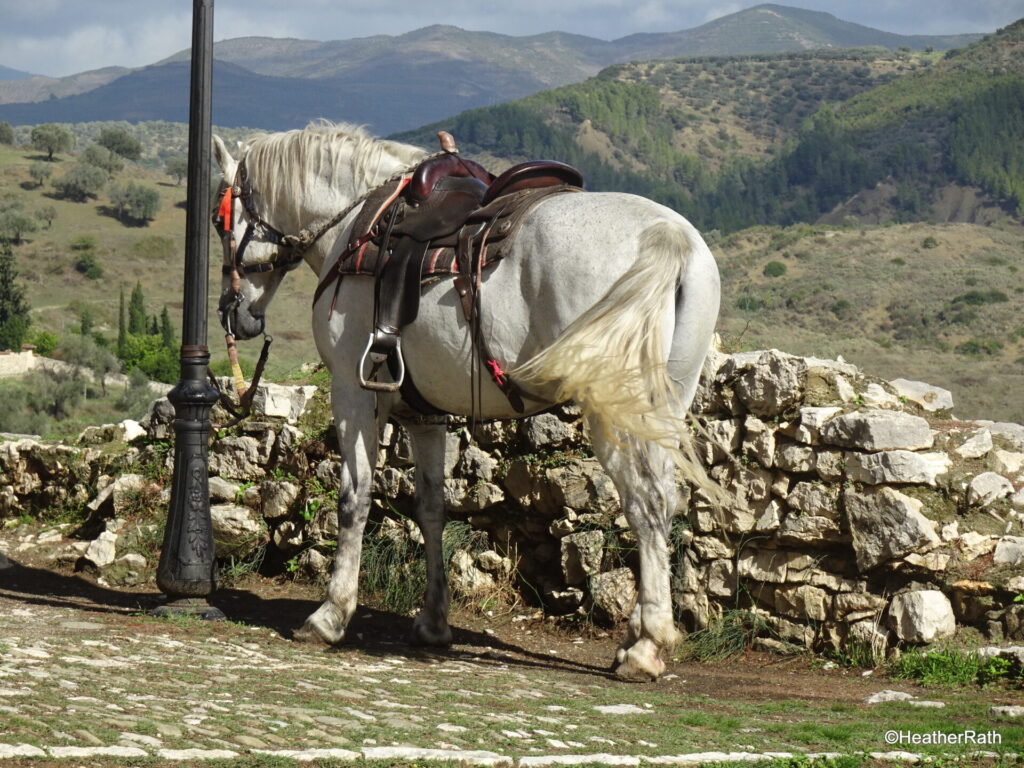
Most residents have cars but at least one chose a classic method
Book your day trip from Tirana HERE while still available
Artisan souvenirs from Berat Albania
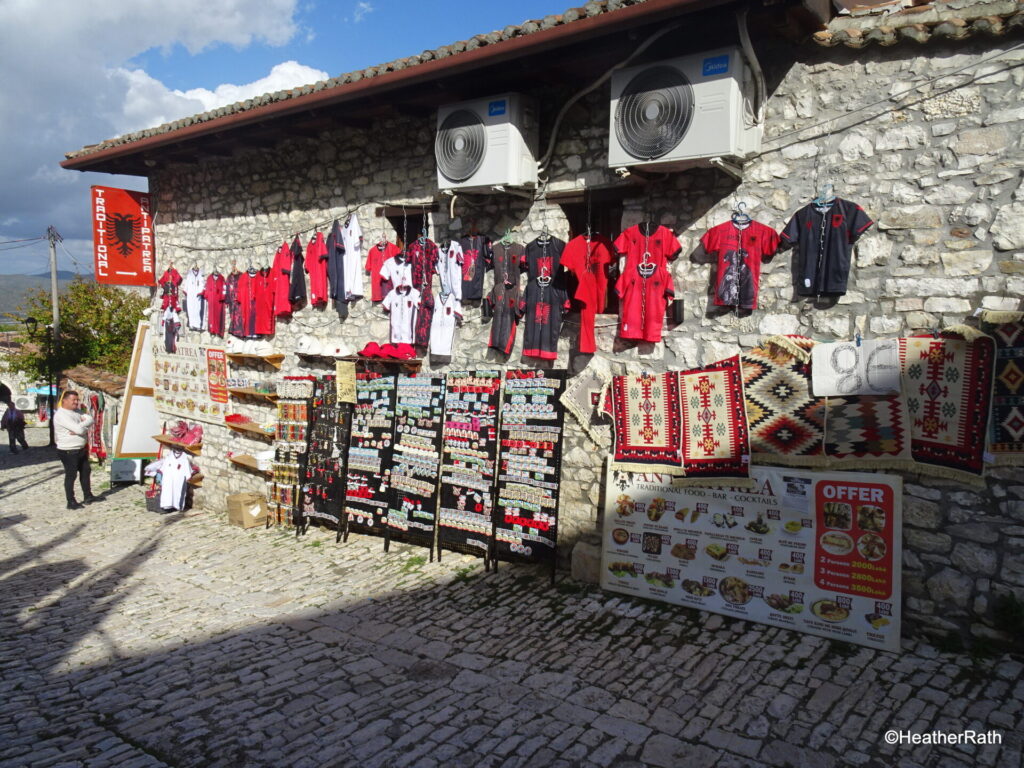
There are several places to purchase artisan clothing in the castle as well as in the town below. Be sure that what you buy is authentic. Locals have woven and knitted most of the items.
Ottoman door knockers
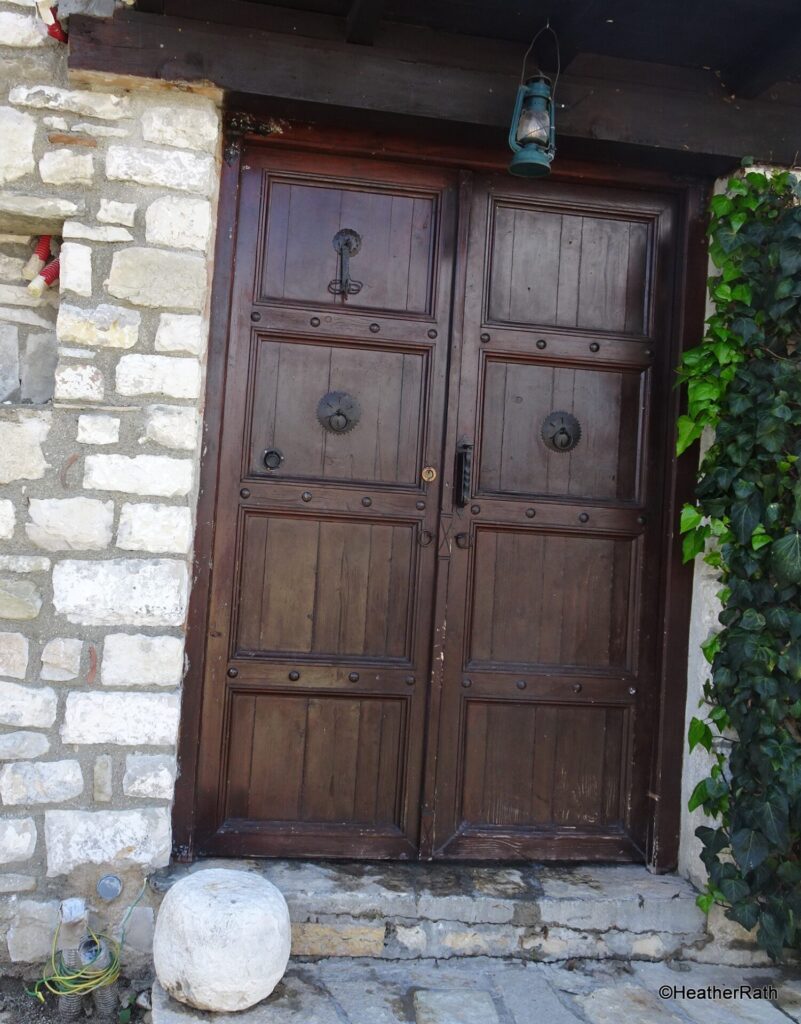
Ottoman doors of some of the homes inside the walls. Note the knocker on the top left is a male symbol. The custom then was that a male knocking on this door would use that knocker and then the person inside would be a male who answered the door. A female would use the round knocker to be answered by a female. Why there are two female knockers and only one male knocker is a mystery to us.
View from the castle & legend
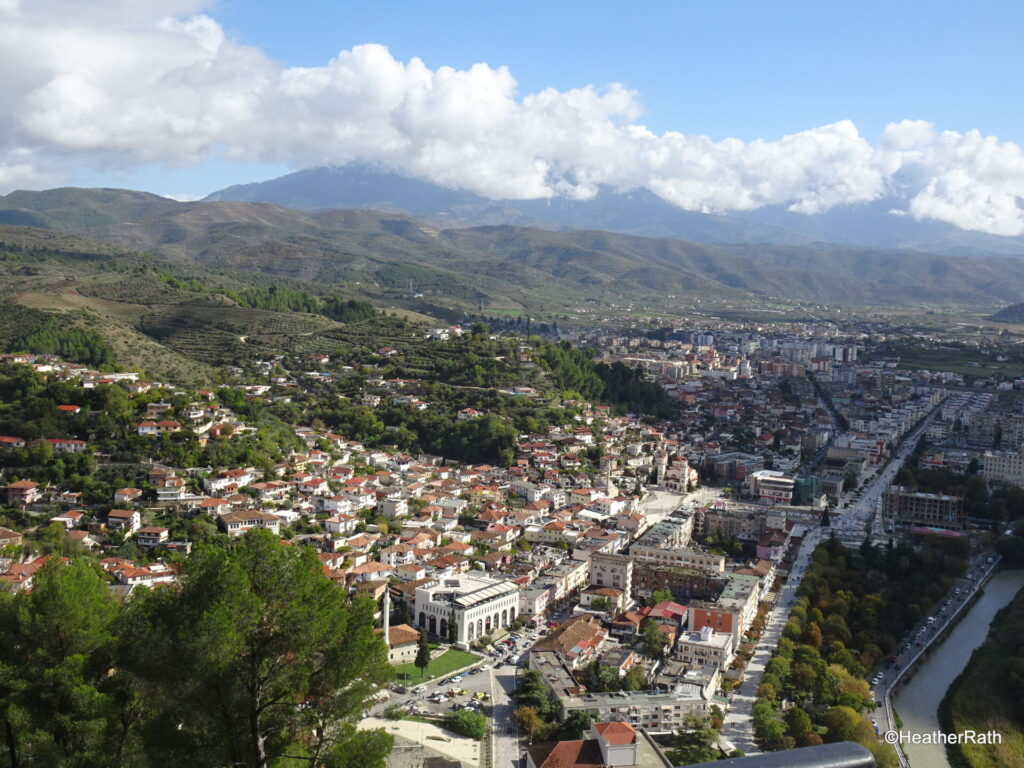
View from the Castle overlooking ‘new town’ Berat.
Legend has it that two brothers Tomorr and Shpirag fell in love with a beautiful girl named Osum. Osum loved both of them equally. When the brothers realized they both loved the same girl, they had a fight in which Tomorr cut Shpirag to pieces with his sword and Shpirag fired cannons on his brother Tomorr. They both died in the fight and Osum cried from the top of the castle. Her tears formed the Osum River. On a clear day one can see holes on Tomorr mountain(visible in the background) (elevation 2413 m). On Shpirag mountain, on the other side of the castle, one can see sections seemingly cut into pieces. Currently, the Osum River divides the two neighborhoods of Mangalem and Gorica.
Gorica Bridge
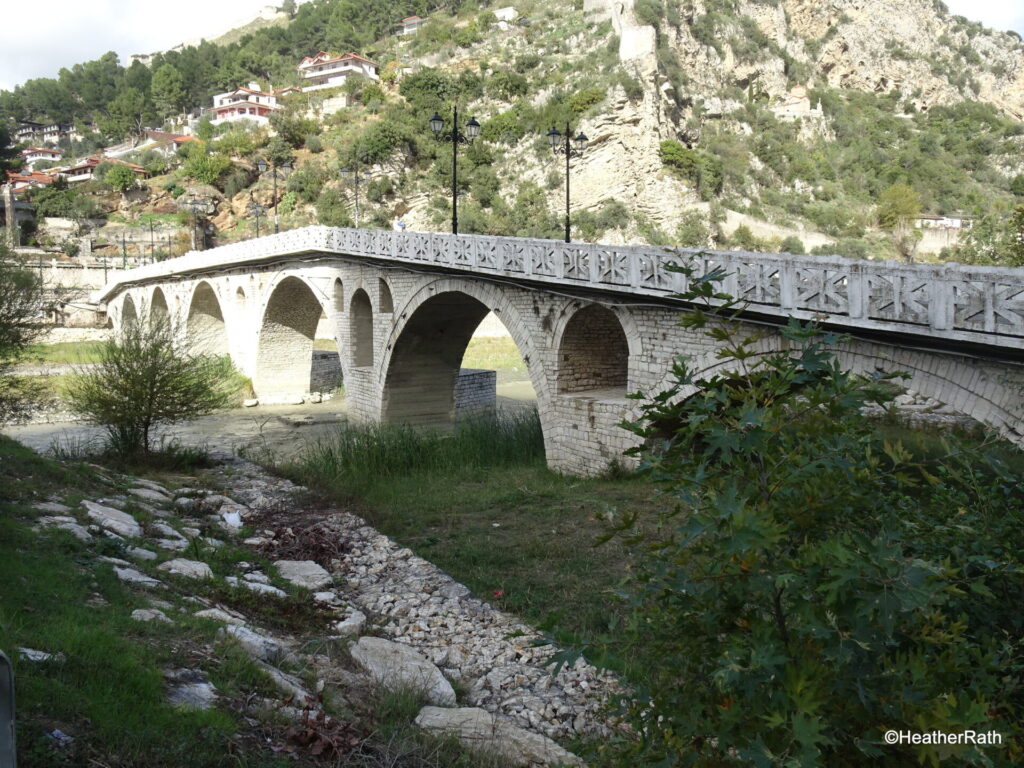
Gorica Bridge over the Osum River is one of the oldest and most popular Ottoman bridges in Albania. The bridge connects the Gorica and Mangalem neighbourhoods, two parts of Berat, It was originally built from wood in 1780 and was rebuilt with stone in the 1920s.
There is a local legend – the original wooden bridge contained a dungeon in which a girl would be incarcerated and starved to appease the spirits responsible for the safety of the bridge.
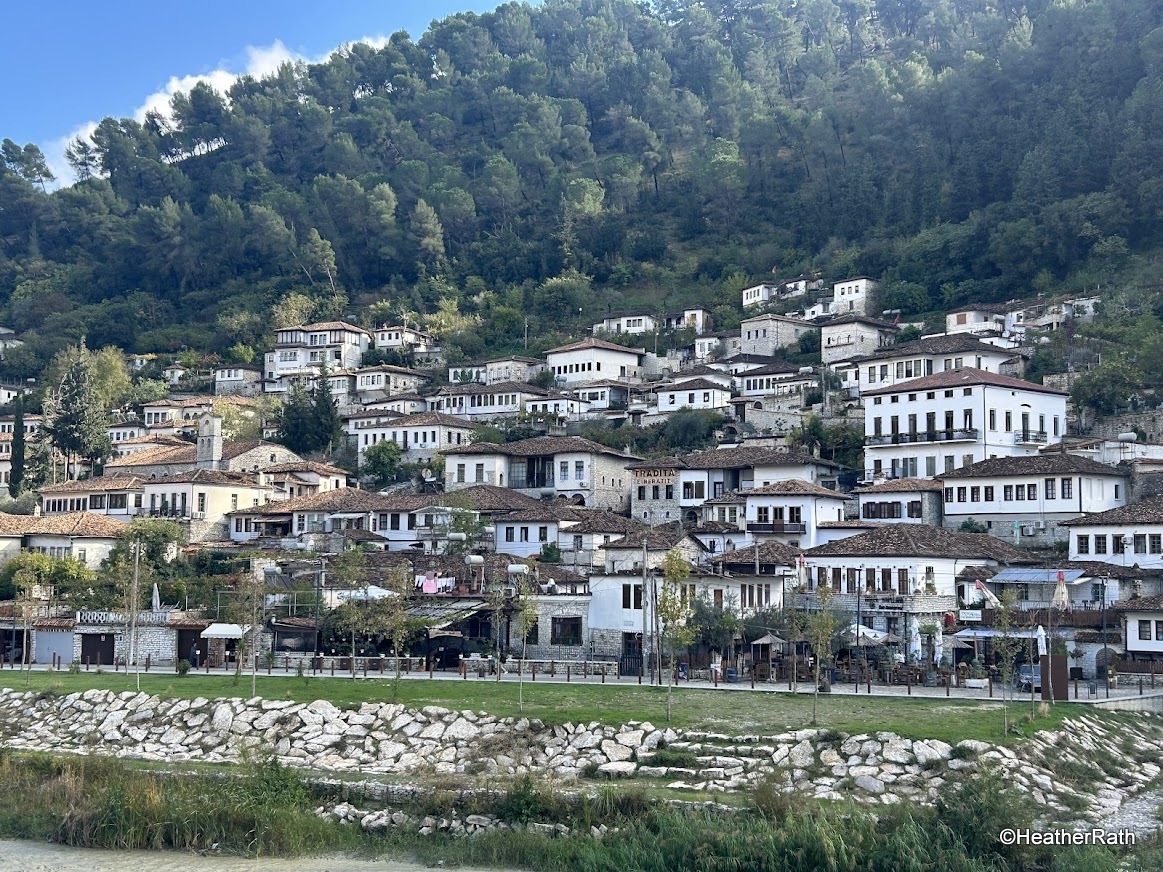
Iconic photo of city of 1000 windows Berat Albania
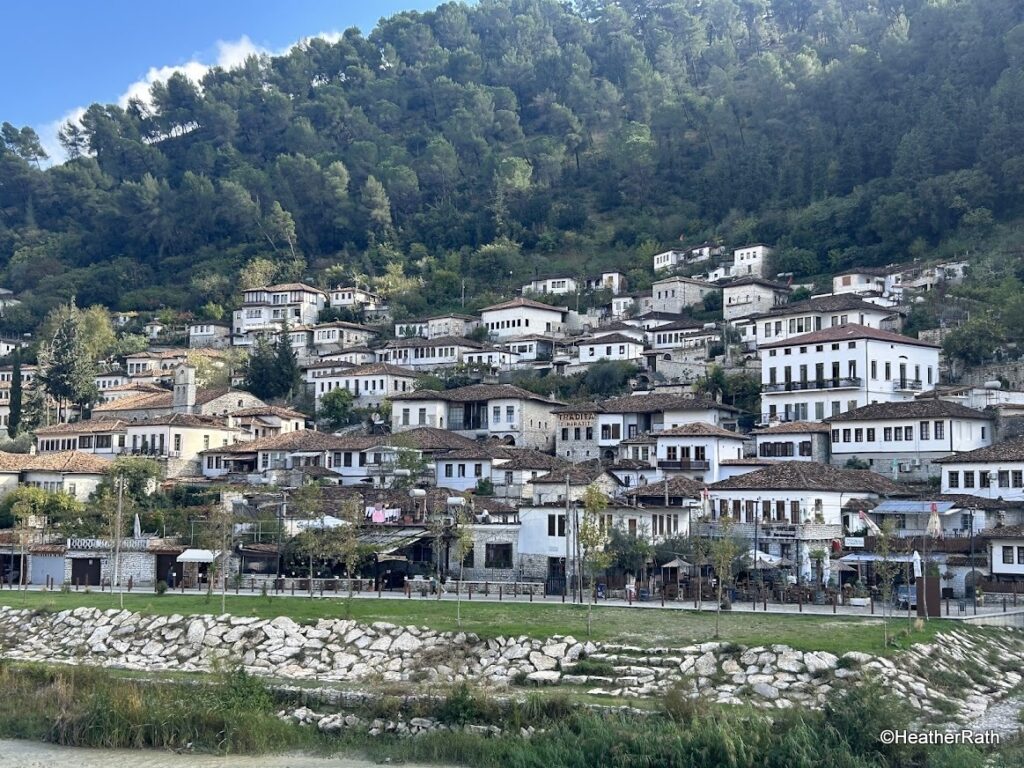
Ottoman houses in the Gorica neighbourhood, from the Mangelem side of the Osum River. This style of house is on both sides and gives the name to the ‘city of 1000 windows’ aka ‘city of one over one windows’ (BTW most suspect that there are less than 1000 windows as they have never been counted). If time permits wander the narrow streets in this area. Centre left is the 19th century St. Spiridon Orthodox church.
Shrub trimmed teddy bear
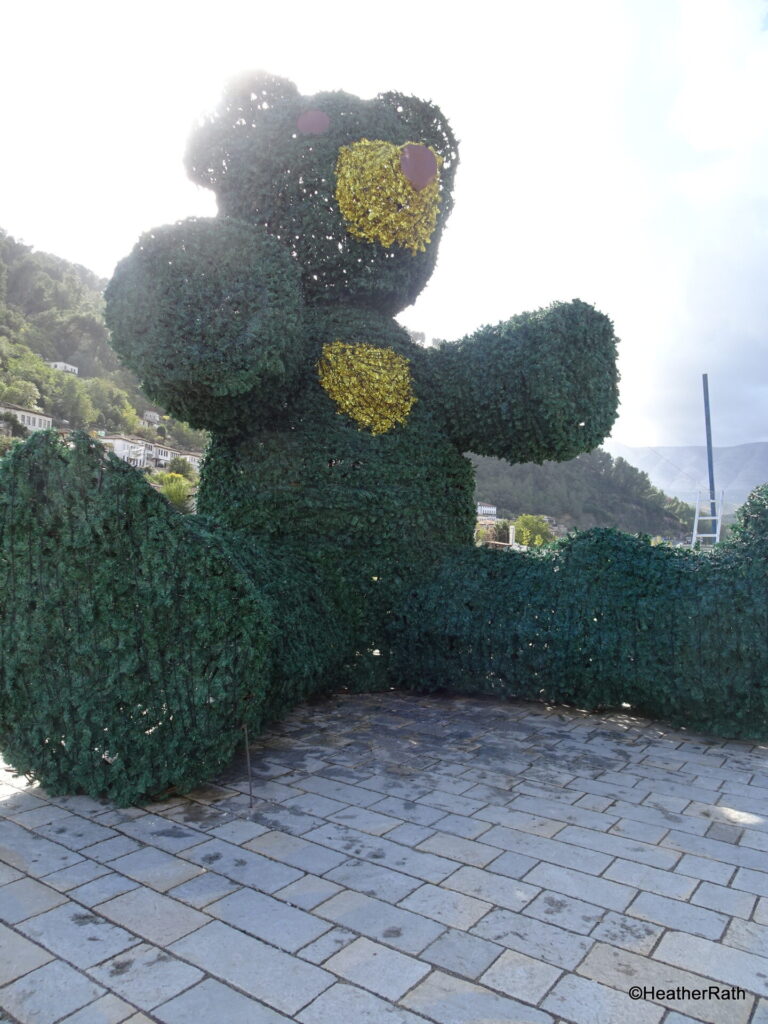
A shrub trimmed to look like a teddy bear. Apparently many Albanian people are superstitious. The bear represents good fortune.
A teddy bear (or sometimes a scarecrow or other stuffed animal) is often hung on a house or building under construction to bring good luck and, more specifically, to ward off the ‘evil eye’.
Bachelors’ Mosque
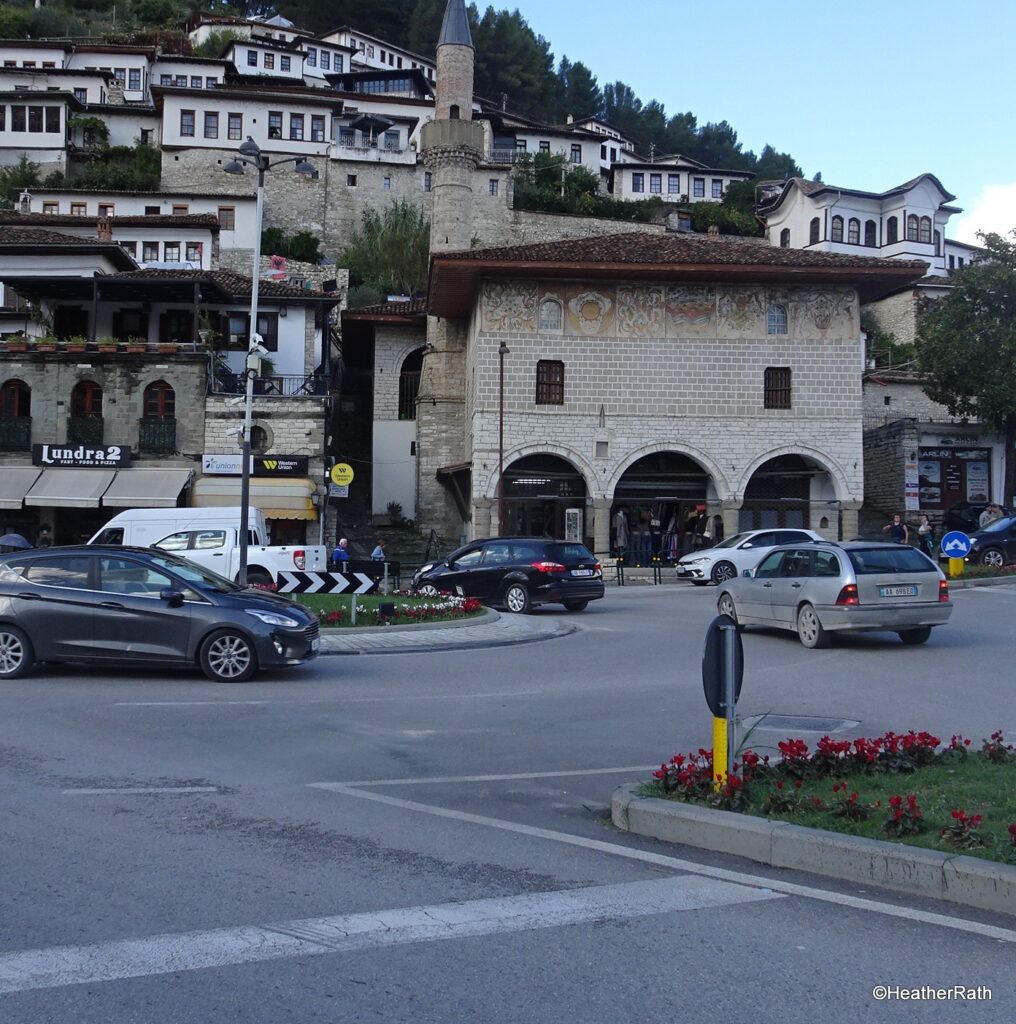
This is the 19th-century Bachelors’ Mosque. It was built for unmarried shop assistants and junior craftsmen.
The story goes that men who wanted to be away from the family for a short while would say they are going to the Bachelors’ Mosque. They would actually go elsewhere instead. Use your imagination. Location on the Mangalem side of the new bridge and to the right.
Another mosque in the the same area worth visiting is the 15th century King Mosque. Just opposite the King Mosque is the 18th century Gate of the Pasha.
Enjoy a MonBlan dessert in Berat Albania
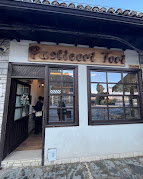
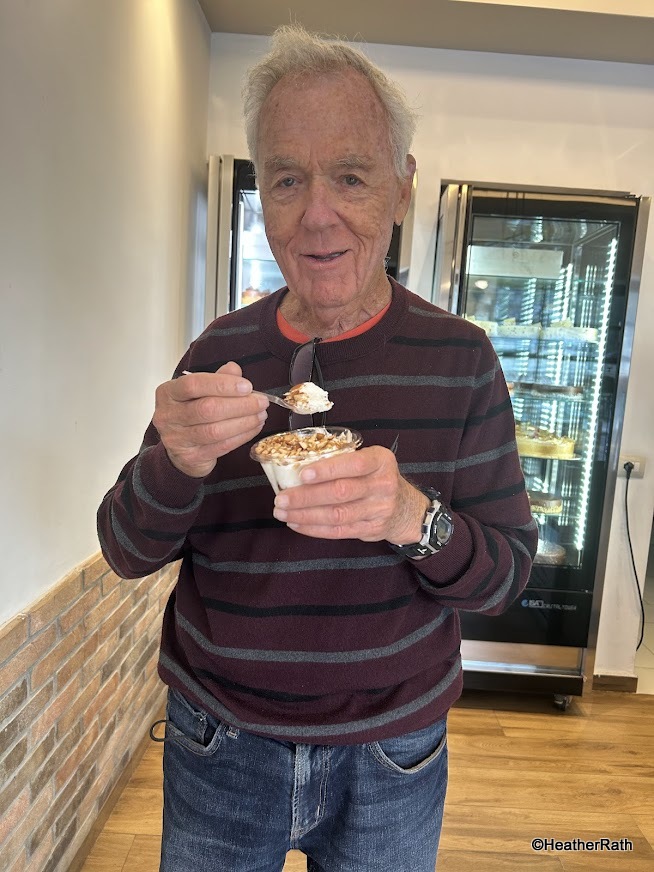
The MonBlan dessert a White Mountain or Mont Blanc. It was first created in Berat by a French chef and is a traditional and creamy meringue (egg whites) dessert. We were told that it originated in Pasticeri Tori (photo above) on Rruga Antipatrea just before the Bachelors’ Mosque; this is the best place to get one. Only €1. Do not miss this dessert.!
Stroll along Bulevardi Republika
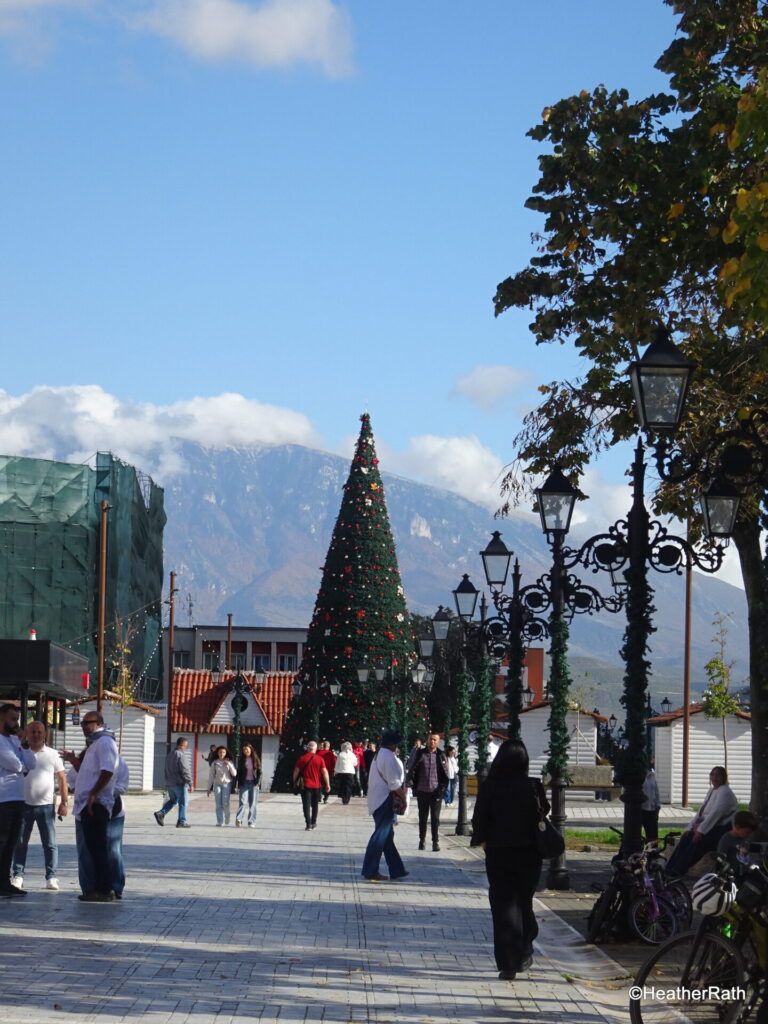
Just to the right of the New Bridge on the Mangalem side of the Osman River. A nice park on one side and many bars, restaurants, stores on the left side. Even in October they were ready for Christmas.
Saint Demetrius Cathedral
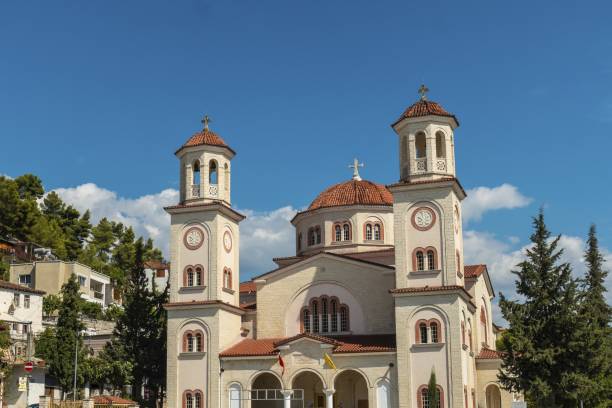
Continue along Bulevardi Republika to the Central Square and you will find Saint Demetrius Cathedral. This is a Greek Orthodox church
Visit a local award winning winery
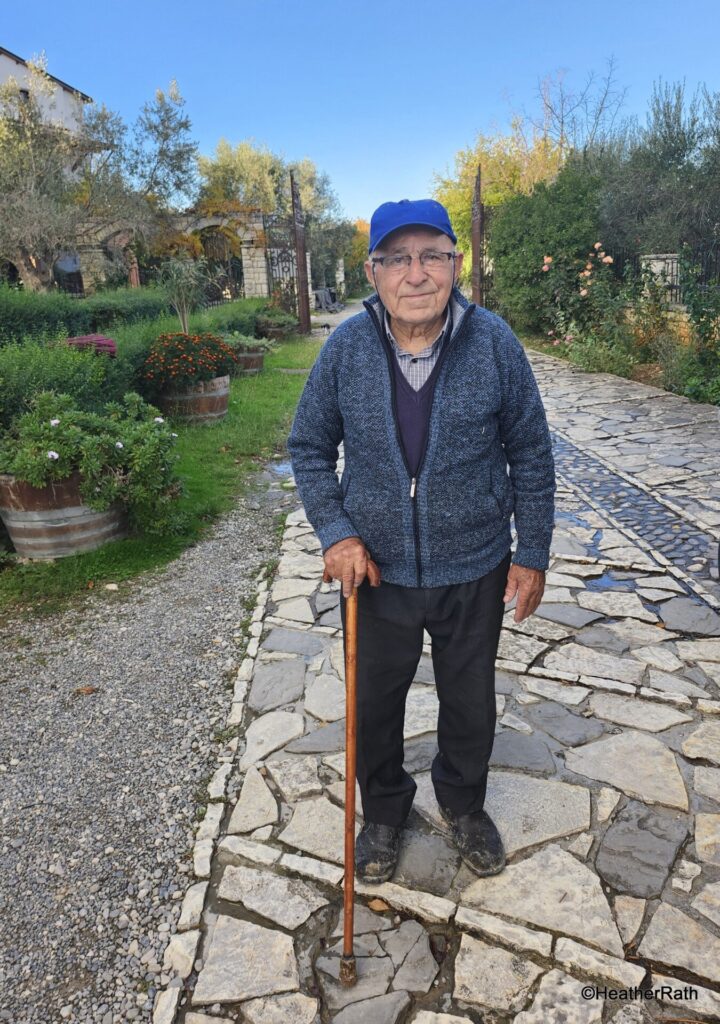
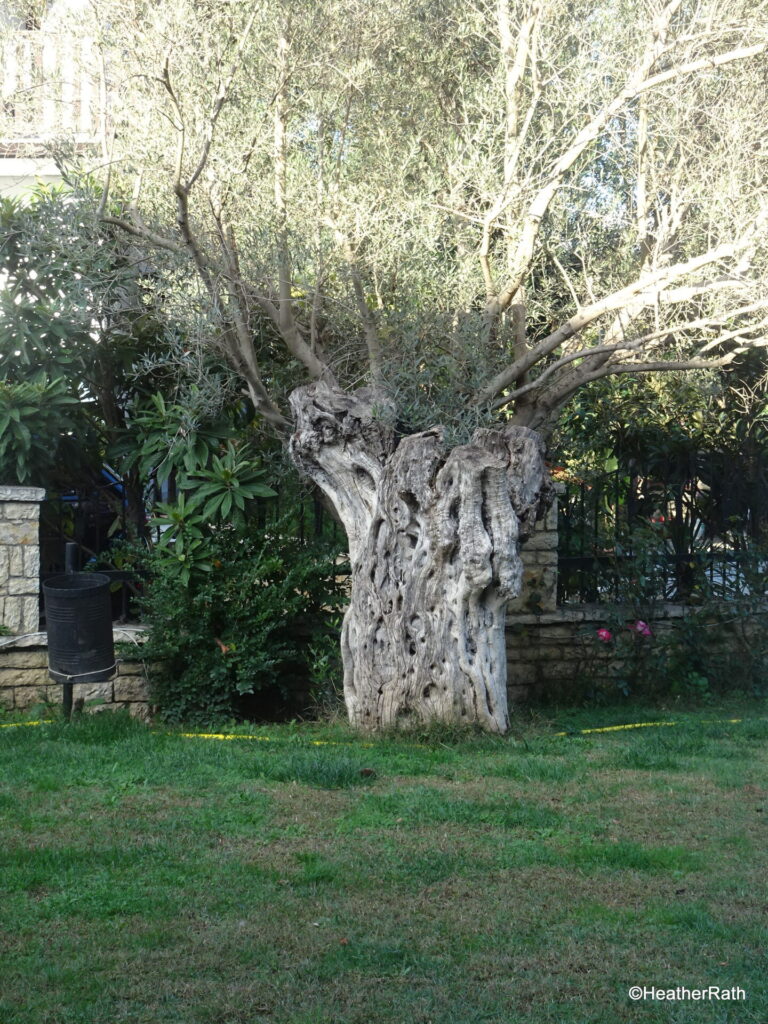
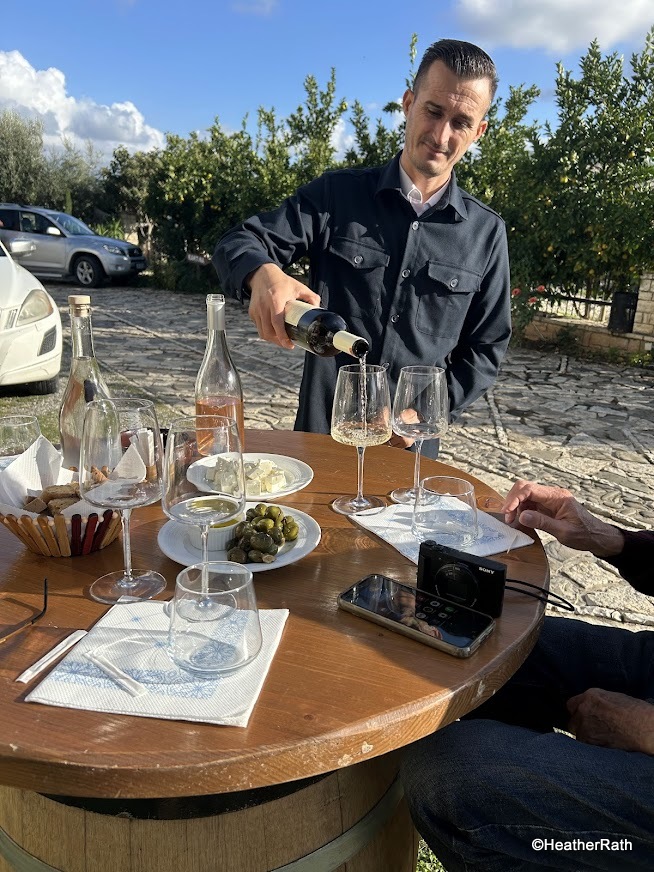
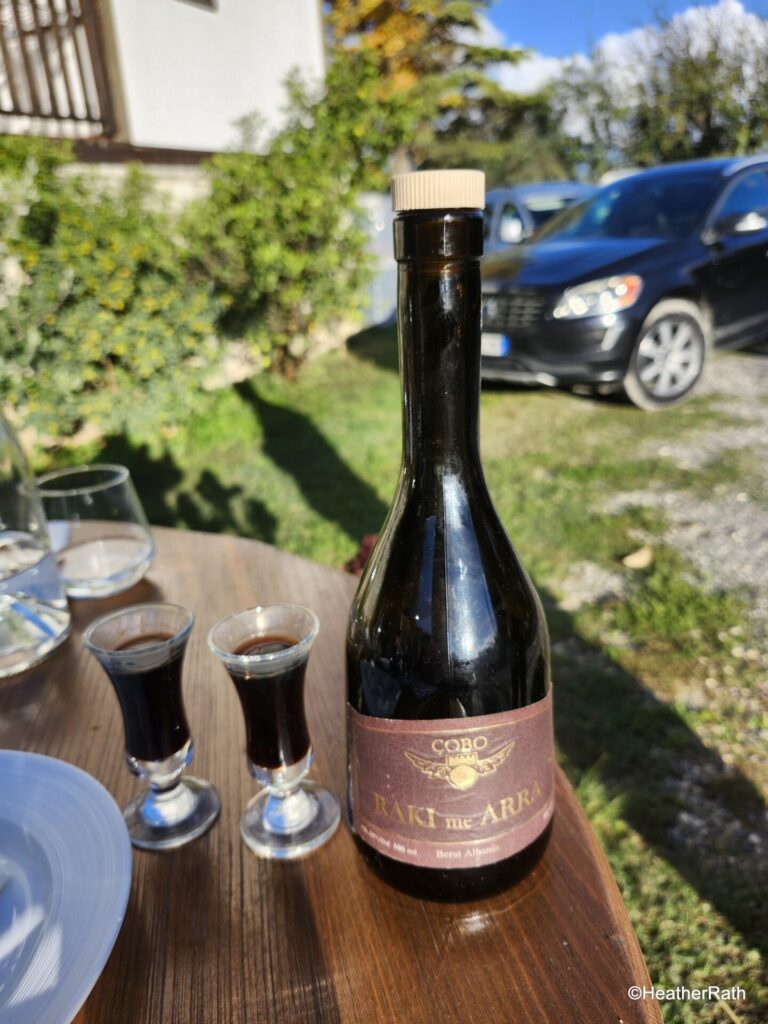
We visited Cobo Winery just 14km from Berat on the way to Durres. We met the original owner/creator (at 89 years of age) and toured the winery. They specialize in sparkling wines and have won international awards for it as well as some of their still wines. For €25 each we had a sparkling wine, 2 reds, 2 whites and a raki to taste. We munched on a quantity of olives, olive oil, 2 kinds of cheese and bread – more than we could eat.
Raki, national drink of Albania, is fermented and distilled from the leftovers from the wine making process – things like the skins, stems and must. It is normally clear with a % of alcohol from 35-40. The raki we tasted was from walnuts and was dark coloured. It had a slight cough syrup taste and could be used for throat and chest infections.
Conclusion
We took a day trip from Durres with a guide/driver to explore the heritage city of Berat Albania. It was a highlight of our stay in Albania. We experienced history, culture and wine in one day. Well worth the effort.
How to get to Berat Albania
We took the easy way by hiring our own guide/driver from Durres. Cost was about 70 €. The guide ensured that we would cover all the main sights and then some. On our own we would have needed 2 days.
Buses and tours are available from Durres and Tirana.
Where to eat in Berat
There are many restaurants and bars in New Berat and a few in the Castle’s Old Town. Just ask a local for the best places to eat and drink. Don’t forget to have MonBlan.
Where to stay in Berat Albania
Since we didn’t stay overnight we have no direct experience. However click the link below to see available accommodation.
Book your accommodation HERE before it sells out
FREE
FREE
new subscribers will receive a free award winning short story by Heather
Read our other blogs of Albania
Read more logs HERE
Be a guest blogger
We welcome guest blogger – contact us HERE with the tag ‘blogger’
Read more by Heather
Checkout books by Heather HERE. Her books are available from Amazon worldwide – England, Europe, Australia, South America, United States Mexico and Canada
Need art
Need some art to grace your walls? Click here